Cat Vision
A century after the first studies of feline eyes, scientists are discovering that cats inhabit a visual world we can barely imagine—and it's forcing them to rethink what "seeing" means

In a basement laboratory at Cornell University on a Tuesday afternoon in March, two vision scientists stand over a sedated tabby cat, arguing about what the animal sees when it wakes. Ronald Hoy, who has spent 30 years studying invertebrate sensory systems before switching to mammals, insists the cat experiences something like a washed-out photograph—colors muted, edges softened. Across the table, his former student Sarah Chen, now running her own lab at UC Davis, shakes her head. She believes the cat's visual world is richer than Hoy's, just organized around different priorities. The cat, oblivious to their dispute, breathes steadily under anesthesia while a fiber-optic probe records signals from its retina.
This disagreement captures a divide that has split the field of comparative vision science for the past two decades. The argument is not about the anatomy of cat eyes, which has been mapped in exhaustive detail. Researchers know exactly how many rod cells pack the feline retina (about 25 times more than cones), the precise curve of the tapetum lucidum that makes cat eyes glow in headlights, the muscles that can dilate pupils to nearly the full width of the iris. The dispute is about something harder to pin down: what all this machinery produces in the animal's experience.
"We can measure every photon that enters the eye and trace every signal that leaves the optic nerve. What we can't measure is the picture that forms in the cat's mind—or whether 'picture' is even the right word."— Ronald Hoy, Cornell University
The scientific study of cat vision began in 1876, when a Dutch ophthalmologist named Frans Cornelis Donders persuaded a colleague to remove the eyes from a freshly dead cat and shine various wavelengths of light through the lenses. Donders was interested in accommodation—how eyes focus on objects at different distances—and cats, with their large eyes and cooperative temperament under sedation, made convenient subjects. His drawings of the cat lens, published in a German ophthalmology journal, remained the standard reference for sixty years.
The Vertebrate Eye and Its Adaptive Radiation
This 785-page landmark text synthesized everything known about feline vision, describing cats as living "in a world of moving shadows."
Gordon Walls changed the field in 1942 with his 785-page book The Vertebrate Eye and Its Adaptive Radiation. Working at the University of California, Berkeley, Walls had dissected the eyes of over 600 species, from hagfish to eagles. His chapter on cats synthesized everything known about feline vision into a coherent portrait: an eye optimized for low-light hunting, with limited color discrimination, poor resolution of fine detail, and extraordinary sensitivity to motion. Walls wrote that a cat "lives in a world of moving shadows" and suggested the animal's visual experience was closer to watching a flickering silent film than viewing a high-definition photograph.
This characterization stuck. For the next five decades, textbooks repeated Walls's description almost verbatim. Cats were nocturnal hunters with primitive color vision and blurry daytime sight—evolutionary specialists who had traded visual acuity for sensitivity.
The first cracks in this consensus appeared in 1994, when a postdoctoral researcher at the University of Munich named Almut Kelber published a study on cone cells in domestic cats. Kelber, who had trained as an entomologist studying bee vision, brought techniques from insect research to mammalian eyes. She discovered that cat cones responded to a broader range of wavelengths than previously measured, including light in the near-ultraviolet spectrum.

"Everyone told me I had made a mistake," Kelber recalls. She is now a professor at Lund University in Sweden, where her lab studies vision across the animal kingdom. "The reviewers said cats cannot see UV light—it says so in every textbook. I had to repeat the experiments four times before the paper was accepted."
Kelber's finding sat largely ignored for fifteen years. Her research moved on to butterflies and birds. The cat paper accumulated citations slowly, mostly from other scientists working on obscure aspects of mammalian photoreceptors.
The revival came from an unexpected direction. In 2012, Ron Douglas at City University London was investigating how different animals' lenses filter ultraviolet light. Douglas had been measuring lens transmission in preserved eyes from natural history museum collections—hundreds of species, from mice to whales. When he finally got around to testing domestic cats, he found that feline lenses transmitted far more UV light than human lenses, enough to stimulate the cones Kelber had described years earlier.
"I called Almut immediately," Douglas says. "I said, 'You were right, and I think we've been underestimating cats for a hundred years.'"
Douglas and Kelber began corresponding regularly, sharing unpublished data and debating interpretations. Their exchanges drew in other researchers: Chen, who had developed a technique for recording from single cone cells in living animals; a computational neuroscientist in Tokyo named Yuki Kobayashi, who built models of visual processing in mammalian brains; and eventually Hoy, who brought expertise in auditory systems and an outsider's perspective on vision research.
The group never formally organized. They had no name, no funding, no regular meetings. They communicated through email chains that sometimes stretched over months, debating fine points of photoreceptor physiology or trading references to obscure papers from the 1950s. Chen called it "the cat vision underground."

Their collective work produced a revised portrait of feline vision that differs substantially from Walls's 1942 description. Cats, they argue, do not live in a world of blurry shadows. Their eyes are tuned to a different visual environment—one in which motion matters more than color, edges matter more than textures, and the ultraviolet glow of urine marks and territorial boundaries is as visible as a neon sign.
"We kept asking the wrong question. We asked what cats are missing compared to humans. We should have asked what they're detecting that we can't."— Sarah Chen, UC Davis
Chen's path to vision science was circuitous. She grew up in Fresno, California, the daughter of immigrants who ran a grocery store. Her parents expected her to become a doctor or a lawyer. She enrolled in pre-med at Stanford but dropped out after two years, bored by the memorization and troubled by the competitive atmosphere. For the next three years, she worked at a veterinary clinic in San Jose, restraining animals during examinations and cleaning surgical instruments.
"I spent a lot of time looking at eyes," she says. "Dogs with cataracts, cats with glaucoma, rabbits with infections. I became obsessed with how these animals experienced their conditions. A dog going blind doesn't know it's going blind. What does that mean?"
She returned to school at UC Santa Cruz, majoring in cognitive science. A course on animal perception introduced her to the work of Thomas Nagel, the philosopher who wrote the famous essay "What Is It Like to Be a Bat?" Nagel argued that even if we understood every physical fact about bat echolocation, we could never know what the experience of being a bat feels like from the inside. Chen found the argument both compelling and frustrating. She wanted to get as close as possible to the bat's experience, even if complete understanding remained out of reach.

Dr. Sarah Chen
Chen developed non-invasive techniques using electrode-bearing contact lenses to record retinal responses in awake cats, revolutionizing how researchers study feline vision.
She did her graduate work with Hoy at Cornell, developing methods to record from retinal cells in awake, behaving animals. Her thesis focused on zebrafish, which have excellent color vision and transparent skulls that make imaging straightforward. The cat work came later, after she had her own lab and could pursue riskier projects.
"Ron always said I should stick to fish," Chen says. "Cats are too hard, too variable, too politically complicated. He was right about all of that. I did it anyway."
The political complications Hoy mentioned involve animal welfare regulations that have grown steadily stricter over the past two decades. Cats occupy an unusual position in research ethics. They are common household pets, which makes the public sensitive to their use in experiments. They are also difficult to work with—less docile than mice, more expensive to house than rats, harder to breed in controlled conditions than either. Most vision researchers who want to study mammalian eyes have moved to other species.
Chen has developed techniques that allow her to measure retinal responses in awake cats using nothing more invasive than contact lenses equipped with tiny electrodes. The cats are trained to sit still for a few minutes in exchange for food rewards. Her lab currently has three subjects: a gray male named Walter, a calico female named Bast, and an orange tabby named Kramer who refuses to cooperate with most experiments but occasionally produces beautiful data.
Walter — A gray male who will sit perfectly still for an hour during retinal recordings but refuses to walk across a room for food rewards in behavioral tests.
Bast — A calico female who tolerates both recording equipment and behavioral tasks with consistent reliability.
Kramer — An orange tabby who Chen calls "my Heisenberg"—difficult, temperamental, probably a genius, and definitely not following the protocol.
"Kramer is my Heisenberg," Chen says. "Difficult, temperamental, probably a genius. Definitely not following the protocol."
The reduced invasiveness comes with trade-offs. Chen's recordings are noisier than those from anesthetized preparations. She can measure responses from populations of cells, not individuals. Her data require sophisticated statistical analysis to extract meaningful signals.
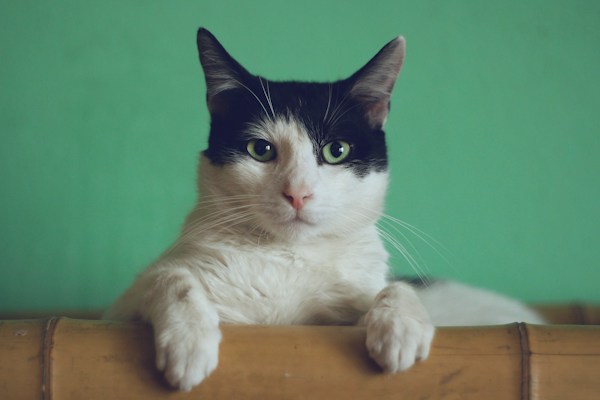

Kobayashi, the computational neuroscientist, has become essential to this work. His models predict what patterns of retinal activity should produce given a particular visual scene, and Chen tests those predictions against real recordings from her cats. When the predictions fail—as they often do—Kobayashi revises the models and Chen designs new experiments.
"We've been wrong about the same thing four times," Kobayashi says cheerfully over a video call from his office in Tokyo. "Each time we understand something new about the cat's visual system. Being wrong is the whole point."
The group's most controversial claim involves consciousness. In a paper published last year in Current Biology, Chen, Kobayashi, and several collaborators argued that cats possess a form of visual awareness distinct from both human vision and the simpler sensory processing found in insects or fish. The paper proposed that cat visual consciousness has a "temporal resolution" approximately three times higher than human consciousness—meaning cats perceive the world as moving more slowly, with more distinct frames per second.
The claim attracted immediate criticism. Anil Seth, a neuroscientist at the University of Sussex who studies consciousness in humans, called the paper "an interesting speculation unsupported by the data presented." He pointed out that the experiments measured retinal responses, not brain activity, and that inferring conscious experience from peripheral neural signals required assumptions the authors did not justify.
Chen agrees that the paper overreached. "We got excited and went too far," she says. "The editors wanted a strong conclusion, and we gave them one we couldn't defend. The retinal data are solid. The consciousness claims are not."
She and Kobayashi are now collaborating with a group at MIT that has developed techniques for recording from visual cortex in freely moving cats. The work is slow—the cats must be trained to wear wireless recording equipment, which some of them tolerate and others do not—but preliminary results suggest the temporal resolution differences observed in the retina are preserved, and possibly amplified, in the brain.
Hoy remains skeptical. He has spent the past year writing a review paper that challenges several of his former student's conclusions. The paper, currently under review at Annual Review of Neuroscience, argues that most evidence for enhanced cat vision can be explained by simpler mechanisms that do not require invoking consciousness.
"Sarah is a brilliant experimentalist," Hoy says. "Her data are beautiful. Her interpretations are too romantic. She wants cats to have rich inner lives because she loves cats. I understand the impulse. It's not science."

Their disagreement has become public. At a conference in San Diego last October, Hoy presented a slide showing what he called "the five fallacies of feline consciousness research." Chen was in the audience. During the question period, she stood up and challenged Hoy's characterization of her work. The exchange grew heated. Colleagues in the audience shifted uncomfortably.
"It was awful," Chen says. "Ron was my mentor. I owe him everything. We've talked since then and we're fine personally. Scientifically, we're still not speaking the same language."
Hoy tells a different version. "Sarah and I have always argued. It's how we work. The conference thing got exaggerated in the retelling. We disagreed in public. That's what scientists are supposed to do."
The debate over cat consciousness is part of a broader movement in biology to take animal experience seriously as an object of scientific inquiry. For most of the twentieth century, researchers avoided discussing animal minds. Behaviorism, the dominant paradigm in psychology, treated internal mental states as unknowable and therefore irrelevant. Animals were stimulus-response machines; asking what they felt was considered anthropomorphic and unscientific.
This consensus began to break down in the 1970s, when Donald Griffin, an ecologist at Rockefeller University, published a book called The Question of Animal Awareness. Griffin argued that scientists had overcorrected against anthropomorphism and were now ignoring obvious evidence that many animals have complex mental lives. His book was controversial—some colleagues accused him of abandoning scientific rigor—but it opened space for researchers who wanted to study animal cognition without apology.
The field that emerged, sometimes called cognitive ethology, has grown substantially in the past two decades. Researchers have documented tool use in crows, numerical reasoning in chimpanzees, episodic memory in rats, and what appears to be grief in elephants. Each finding has faced criticism from skeptics who propose simpler explanations, and each has eventually gained acceptance as evidence accumulated.
Cat vision research fits this pattern. The early claims about ultraviolet sensitivity and enhanced temporal resolution were dismissed as methodological artifacts. As multiple labs using different techniques have converged on similar findings, resistance has faded. The disagreement now is not about whether cats see differently than humans, but about what that difference means for the animal's experience.
Kelber, the Swedish researcher whose 1994 paper started the UV controversy, finds the consciousness debate uninteresting. "I study physics," she says. "Photons, wavelengths, absorption spectra. What the cat feels when it sees UV light is not a question I can answer, so I don't try."
She has remained focused on basic questions about the evolution of color vision across species. Her current project involves comparing cone cells in wild cats—lions, leopards, lynx—to those in domestic cats, looking for patterns that might reveal how feline vision evolved over millions of years. The work requires traveling to zoos and wildlife preserves around the world to collect tissue samples from animals that have died of natural causes.

"I've been to seventeen countries in the past three years," Kelber says. "The logistics are terrible. The paperwork is endless. But when you look at a lion's retina under the microscope and see the same structures you found in a house cat—that's worth it."
Her preliminary results suggest that ultraviolet sensitivity is widespread across the cat family, from the smallest wildcats to the largest tigers. The function remains unclear. One hypothesis involves prey detection—many small mammals have urine that fluoresces under UV light, which might make them more visible to cat predators. Another involves social signaling—cats might use UV patterns in their own urine to mark territory or communicate with potential mates.
"We have hypotheses," Kelber says. "What we don't have is a way to test them that doesn't involve asking the cat what it sees."
At Cornell, Hoy's lab has taken a different approach. His students are training cats to perform behavioral tasks that reveal what visual information they use to navigate their environment. The experiments are simple in concept: a cat learns that food is hidden in one of several locations, and the researchers vary the visual cues available to the animal—colors, patterns, motion—to determine what the cat relies on.
The results have been surprising. Cats perform worse than expected on tasks that require color discrimination, even when the colors differ substantially in wavelength. They perform better than expected on tasks involving motion detection, even when the moving object is small and partially obscured. Most surprisingly, they perform well on tasks that can only be solved using ultraviolet cues—confirming, through behavior rather than physiology, that cats perceive a range of light invisible to humans.
"The UV result is the most important. It's not about receptors or wavelengths. It's about what the animal does. The cat uses UV light to solve problems. That's real."— Ronald Hoy, Cornell University
Chen visited Hoy's lab in February to observe the behavioral experiments firsthand. She brought Walter, her most cooperative subject, to see whether he would perform the same tasks that Hoy's cats had learned. Walter refused. He sat in the center of the testing arena and groomed himself, ignoring the hidden food rewards and the frustrated graduate students trying to guide him.
"That's cats," Chen says. "Every individual is different. Walter will sit perfectly still for an hour while we record from his retina, but he won't walk across a room for a piece of chicken. Hoy's cats are the opposite. They love the behavioral tasks but hate being restrained. You can't generalize."
The visit did accomplish one thing. Chen and Hoy spent an evening at a bar in Ithaca, the first time they had talked privately since the conference confrontation. They did not resolve their scientific disagreement, but they established ground rules for future debates. Chen would stop implying that Hoy was old-fashioned and blind to new evidence. Hoy would stop calling Chen's work "romantic" and acknowledge that the consciousness questions she raises are legitimate, even if he disagrees with her answers.
"We're stuck with each other," Chen says. "The cat vision community is small. If we can't work together, the whole field suffers."
The field is indeed small. A recent bibliometric analysis found only 47 active researchers worldwide who have published more than three papers on cat vision in the past decade. Most work on retinal anatomy or optics, questions that can be addressed with preserved tissue and do not require living animals. Behavioral and cognitive approaches, like those pursued by Chen and Hoy, are rarer because they require extensive training of both animals and researchers.
Funding is precarious. The National Eye Institute, the primary U.S. source of grants for vision research, has no dedicated program for comparative studies. Researchers who want to study cat vision must compete with clinical projects aimed at curing human blindness. The scientific case for cat research—that understanding diverse visual systems reveals general principles of how vision works—is harder to make than the medical case for studying human disease.
"Every grant application, I explain why cats matter," Chen says. "Sometimes the reviewers get it. Sometimes they ask why I'm not studying mice."
Mice have become the dominant model organism in vision research, partly because genetic tools make them easy to manipulate and partly because their small size makes them cheap to maintain. Thousands of papers are published each year on mouse vision. Cat papers number in the dozens. The imbalance means that general theories of mammalian vision are built primarily on mouse data, which may not apply to other species.
"Mice are nocturnal burrowers with terrible eyesight," Hoy says. "We've built a whole field on an animal that barely uses its eyes. It's like studying fish to understand bird flight."

Kobayashi, watching the American debates from Tokyo, has proposed a compromise. His models can simulate visual processing in any species, given enough data about the relevant neural structures. He wants to build a "virtual cat" that would allow researchers to test hypotheses about cat vision without using live animals. The simulation would predict how a cat should behave in various visual environments, and those predictions could be checked against the limited behavioral data that already exist.
"The goal is not to replace experiments," Kobayashi says. "The goal is to make experiments more efficient. If the model predicts that a cat should detect a certain pattern, and the real cats don't detect it, we learn something. We don't have to test everything empirically."
Chen is enthusiastic. Hoy is skeptical. Kelber is not interested. The different reactions reflect different assumptions about what vision science should aim to accomplish.
For Chen, the ultimate goal is understanding cat experience—not just what information the animal extracts from its environment, but how that information is organized into a coherent perception of the world. Models are useful to the extent that they help reveal this organization.
For Hoy, the goal is explaining behavior. What the cat "experiences" is unknowable; what the cat does is observable. A model that predicts behavior is valuable regardless of whether it captures anything about experience.
For Kelber, the goal is evolution. She wants to know how cat vision came to be, what pressures shaped it, how it compares to vision in other species. Models are useful for testing evolutionary hypotheses, not for simulating consciousness.
"We're asking three different questions," Kelber says. "We use the same word—'cat vision'—to describe three different research programs. No wonder we disagree."
The disagreements are not merely academic. As artificial intelligence systems become more sophisticated, researchers are increasingly interested in how biological vision systems process information. Cat eyes, which evolved to extract specific features from complex visual scenes, might inspire new approaches to machine vision. Google's DeepMind division has funded several projects on cat retinal processing, hoping to find algorithms that outperform current neural networks.
"The cat retina does something we don't understand," says Elena Moya, a computer scientist at DeepMind who collaborates with Chen's lab. "It extracts motion and edges with very few neurons, much more efficiently than our best algorithms. If we can figure out how, we might build better cameras, better robots, better self-driving cars."
The practical applications have brought new funding and new attention to the field. They have also brought new tensions. Some researchers worry that the focus on engineering applications will distract from basic science. Others welcome the resources and visibility.
Chen is cautiously optimistic. "The money is good," she says. "The attention is good. As long as we don't let the engineering questions push out the basic questions, we'll be fine."
On the afternoon I left Chen's lab, she was preparing Walter for another recording session. The cat sat on a heated pad, eyes half-closed, while a graduate student fitted him with the electrode-bearing contact lenses. Outside the window, a gray California rain was falling.
I asked Chen what she thought Walter was seeing.
"Right now? Probably not much. Cats don't like rain. Their vision gets worse in low light when there's no contrast. He's probably just perceiving a uniform gray."
She paused, adjusting the lens on Walter's left eye.
"But I don't really know. That's the honest answer. After ten years of studying cat vision, I can tell you what signals leave his retina. I can tell you what those signals probably mean for his behavior. I can't tell you what it's like to be Walter. Maybe I never will. Maybe that's okay."
Walter blinked. The recording equipment hummed. Chen began the experiment.